
About the Author
Peter Slowe, born 1953, did a BSc in geography at Bristol University and then a DPhil at Oxford University (Jesus and Nuffield colleges). His thesis on industrial geography was published as The Advance Factory in Industrial Development and was widely acclaimed for its findings which affected the direction of regional policy, now called ‘levelling up’, for many years.
In his twenties, he joined the government’s Co-operative Development Agency and founded six new workers’ co-operatives at the first-ever Co-operative Enterprise Centre in North East England.
Now with a family, Peter returned to academic geography at the University of Chichester. Specialising in military and political geography, he wrote two top-selling accounts of soldiers’ experiences, first on the Western Front 1914-18, Fields of Death and then in Berlin in 1945 Battlefield Berlin. He also wrote numerous academic papers and his seminal academic work, Geography and Political Power. He also wrote the official biography of British politician Manny Shinwell.
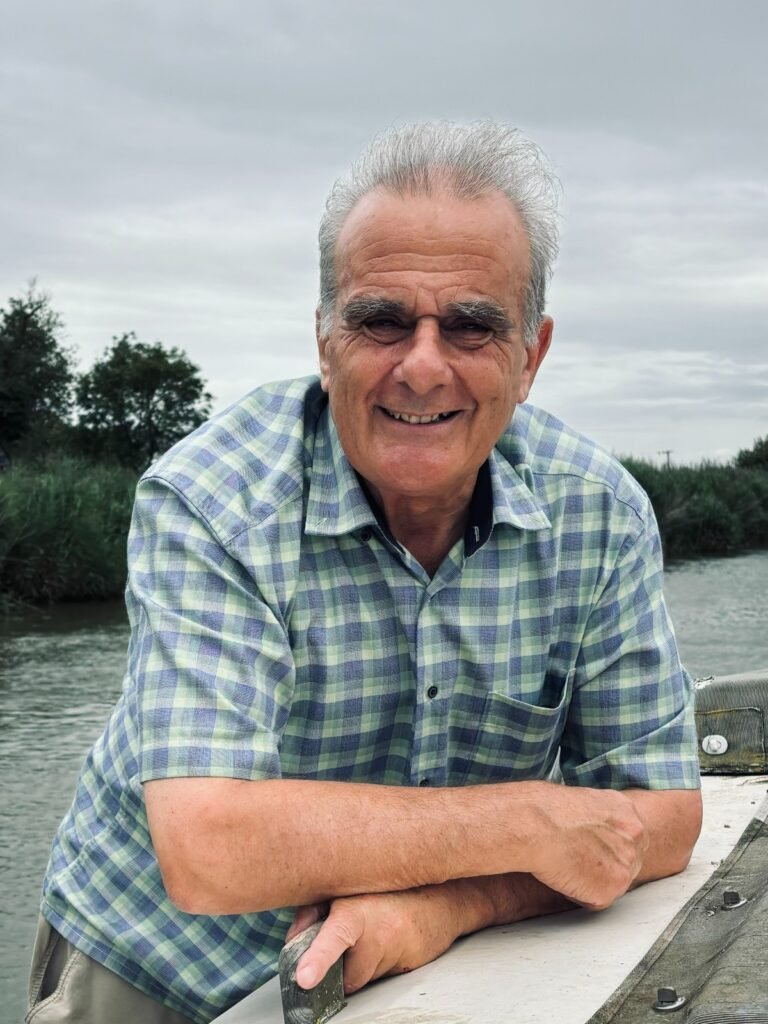
It was at Chichester University, in 1990, that Peter established an EU-funded exchange project with Transilvania University in Romania. This, and similar arrangements in Moldova, enabled him to identify the need for care work and English-teaching in Eastern Europe. He founded Teaching in Moldavia and sent the first group of British students there in 1992. It was the start of Projects Abroad.
In the early years of Projects Abroad, Peter was also Secretary and then Chair of Labour Business (then the Labour Finance and Industry Group), advising and supporting Tony Blair and the Labour Party in opposition and then in government.
Meanwhile, Projects Abroad quickly became the global leader in overseas volunteering. Headquartered in the UK and with recruitment offices across the globe, its projects soon spanned 33 countries and covered a wide range of disciplines including teaching, care, conservation & environment, medicine & healthcare, sports, community projects, business, law & human rights and journalism. Projects were designed specifically for the needs of the communities they served, giving volunteers and interns, the vast majority between 16 and 25, the very best experiences.
Projects Abroad has now sent over 160,000 volunteers and interns around the world, working on over 500 projects.
“What drives Projects Abroad is its combination of successful business with effective philanthropy. It has managed to create a profitable service which depends for its success on doing good works for free in developing countries. The better it performs for poor people, for sick children, and for saving wildlife, the more satisfied are our paying customers. We have created a unique virtuous circle.” – Peter Slowe
Amazon Author Page

More About Projects Abroad

Routledge Publishers